Security guard 2 (ball)
More information.
What are you becoming?
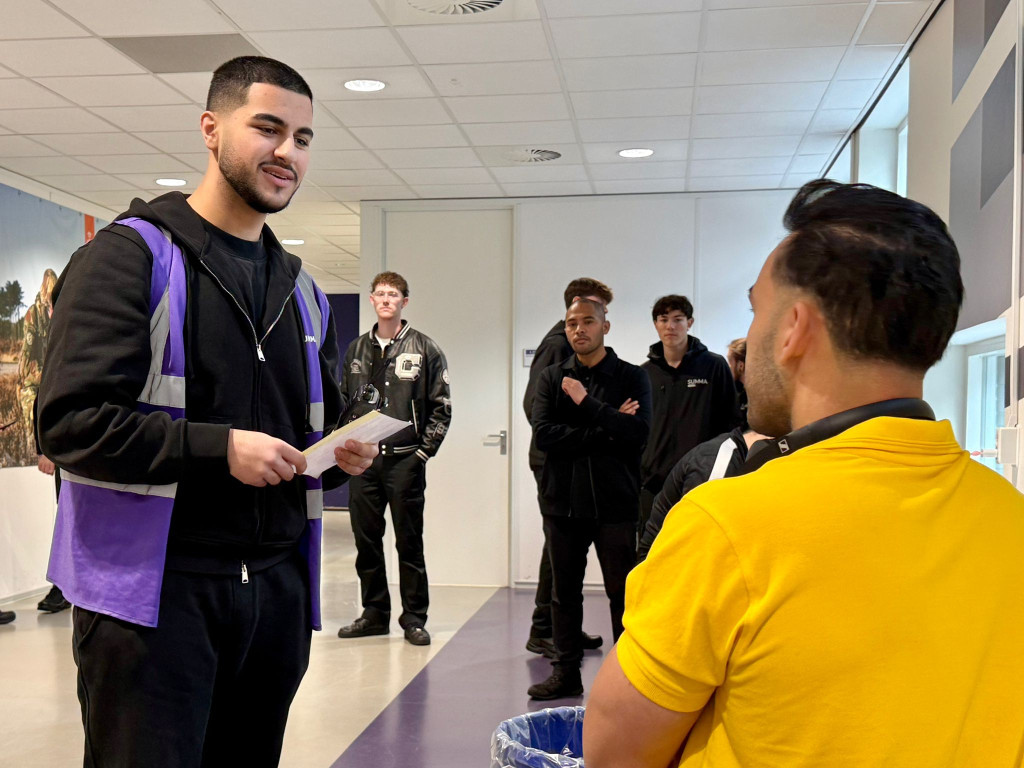
As a "Security Officer Level 2," you can work for a company's security department or for a security company, working in various locations. Security officers can work in offices, schools, airports, emergency response centers, industrial estates, government ministries, events, prisons, or in cash and valuables transport. After completing your diploma, you can specialize through courses. You can also progress to the "Security Officer Level 3" program.
What does your education look like?
You'll attend classes at school and complete internships at accredited training companies. The program lasts two years. You'll begin with the theory exams halfway through the first year. In the second half, you'll complete an internship and conclude your program with the practical exam.
Education and Examination Regulations (OER)
In the Education and Examination Regulations (OER) of a study program, you can read what you will be doing in which period, how much time is spent on this, and an overview of the exams that will be administered. Find the OER for your study program here.
Search by your Crebo number (see the box on the right of this page) to view the OER for the current academic year. This will give you a general idea of what's expected of you when you start the program. The OER for the upcoming academic year will be available in July.
Statutory tuition fees
The statutory tuition fee for the 2027-2028 academic year is 1.554 euros. Check DUO.nl for possible student finance.
Other costs
For the full-time Security Officer Level 2 and 3 courses, it's not necessary to order learning materials. These can be borrowed from the school if needed. If you prefer to have your own books, the introduction week will explain what you need and how to order them.
Laptop
For many study programs, you cannot do without a computer as a student. Check the overview to see if this applies to your program and download the correct specifications.
Other educational supplies
In addition to books and digital course materials, other educational supplies for personal use are required or desired to follow this course. Read more about it here.
Elective courses
This program offers several electives. These allow you to broaden or deepen your expertise or prepare you for advancement to a higher level.
Study in figures
Study in Figures provides clear information about this program and job market opportunities. Would you like to know more about these figures? Then check out this explanation.
What prior education do you need?
For basic vocational training (level 2) you must meet one of the following conditions:
- You have a diploma in pre-vocational secondary education (VMBO) with a basic vocational track, a pre-vocational secondary education (VMBO) with a framework vocational track, a pre-vocational secondary education (VMBO) with a theoretical track, or a mixed track.
- You have an (older) diploma from lbo, vbo, mavo or mavo-vbo.
- You have an entry-level training or basic vocational training diploma (level 2).
- You have proof that you have successfully completed the first three years of pre-university or senior general secondary education (havo) or pre-university education (vwo). This proof is recognized by the government.
Getting to know the school and course
You will be invited for a personal interview or introductory meeting where you will get to know the school and we will see if this course is a good fit for you.
Police screening
You will be screened by the police before you can start at your training company. The training company will then apply for a "green pass" from the chief of police. To obtain this pass, they will check whether you have committed any criminal offenses. They will then determine whether these offenses will block your pass application. Without a pass, you cannot complete the program.
The police will review your personal file for eight years. If you have lived in the Netherlands for less than eight years, you must be able to provide a document from your country of origin stating that you have not had any contact with the police or the judicial authorities there.
Can I contact a teacher or student?
Teachers and students know what's going on at school. Feel free to ask your questions to our teacher using the contact information below:
E-mail
Wenly Lourens
It is also possible to attend a shadowing day, guided tour, or open day. You can find all activities in our calendar.
What are you becoming?
As a "Security Officer Level 2," you can work for a company's security department or for a security company, working in various locations. Security officers can work in offices, schools, airports, emergency response centers, industrial estates, government ministries, events, prisons, or in cash and valuables transport. After completing your diploma, you can specialize through courses. You can also progress to the "Security Officer Level 3" program.
What does your education look like?
You'll attend classes at school and complete internships at accredited training companies. The program lasts two years. You'll begin with the theory exams halfway through the first year. In the second half, you'll complete an internship and conclude your program with the practical exam.
Education and Examination Regulations (OER)
In the Education and Examination Regulations (OER) of a study program, you can read what you will be doing in which period, how much time is spent on this, and an overview of the exams that will be administered. Find the OER for your study program here.
Search by your Crebo number (see the box on the right of this page) to view the OER for the current academic year. This will give you a general idea of what's expected of you when you start the program. The OER for the upcoming academic year will be available in July.
Statutory tuition fees
The statutory tuition fee for the 2027-2028 academic year is 1.554 euros. Check DUO.nl for possible student finance.
Other costs
For the full-time Security Officer Level 2 and 3 courses, it's not necessary to order learning materials. These can be borrowed from the school if needed. If you prefer to have your own books, the introduction week will explain what you need and how to order them.
Laptop
For many study programs, you cannot do without a computer as a student. Check the overview to see if this applies to your program and download the correct specifications.
Other educational supplies
In addition to books and digital course materials, other educational supplies for personal use are required or desired to follow this course. Read more about it here.
Elective courses
This program offers several electives. These allow you to broaden or deepen your expertise or prepare you for advancement to a higher level.
Study in figures
Study in Figures provides clear information about this program and job market opportunities. Would you like to know more about these figures? Then check out this explanation.
What prior education do you need?
For basic vocational training (level 2) you must meet one of the following conditions:
- You have a diploma in pre-vocational secondary education (VMBO) with a basic vocational track, a pre-vocational secondary education (VMBO) with a framework vocational track, a pre-vocational secondary education (VMBO) with a theoretical track, or a mixed track.
- You have an (older) diploma from lbo, vbo, mavo or mavo-vbo.
- You have an entry-level training or basic vocational training diploma (level 2).
- You have proof that you have successfully completed the first three years of pre-university or senior general secondary education (havo) or pre-university education (vwo). This proof is recognized by the government.
Getting to know the school and course
You will be invited for a personal interview or introductory meeting where you will get to know the school and we will see if this course is a good fit for you.
Police screening
You will be screened by the police before you can start at your training company. The training company will then apply for a "green pass" from the chief of police. To obtain this pass, they will check whether you have committed any criminal offenses. They will then determine whether these offenses will block your pass application. Without a pass, you cannot complete the program.
The police will review your personal file for eight years. If you have lived in the Netherlands for less than eight years, you must be able to provide a document from your country of origin stating that you have not had any contact with the police or the judicial authorities there.
Can I contact a teacher or student?
Teachers and students know what's going on at school. Feel free to ask your questions to our teacher using the contact information below:
E-mail
Wenly Lourens
It is also possible to attend a shadowing day, guided tour, or open day. You can find all activities in our calendar.
Industry news
"I am getting there stronger from"
Something else?
Also take a look at these courses
Need help with your study choice?
We are ready for you!
Are you unsure about which study program to choose, or do you have no idea yet which direction you want to take? Then take the study choice test and talk to our study choice coaches. We are happy to help you on your way.