Research instrument maker (bol)
More information.
What are you becoming?
After your training, you will be a research instrument maker. For example, you can work at companies and organizations within:
- research & development;
- high-tech industry;
- medical technology;
- machine and equipment manufacturing;
- precision engineering;
- aerospace.
As a research instrument maker, you often work on products that do not yet exist. You make prototypes and precision instruments that enable researchers, engineers, and companies to develop new technology.
With your level 4 diploma, you can also progress to higher professional education (HBO), for example to Mechanical Engineering or Mechatronics.
What does the training look like?
The Research Instrument Maker program is a full-time (bol) program. This means that you complete the majority of your education at school and also gain practical experience during internships at companies.
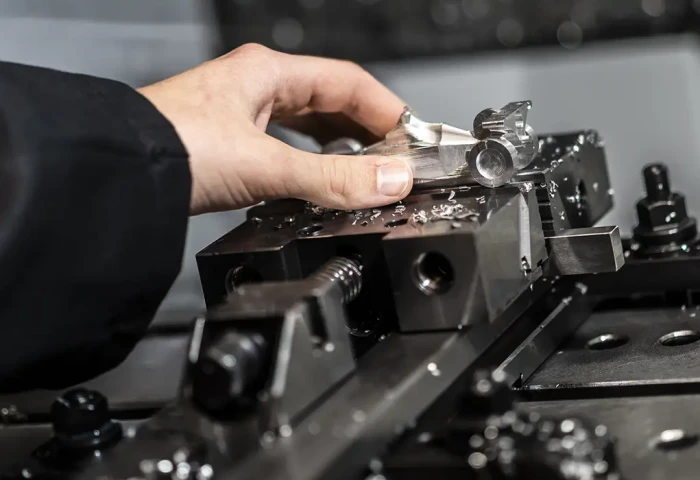
Practical work is central. You work extensively in the workshop and learn to make increasingly complex products and instruments step by step.
In the first year, you learn the basics of the trade. You are introduced to various manufacturing processes and learn turning and milling, among other things. You learn to work safely and independently with machines and to accurately measure, make, and assemble parts.
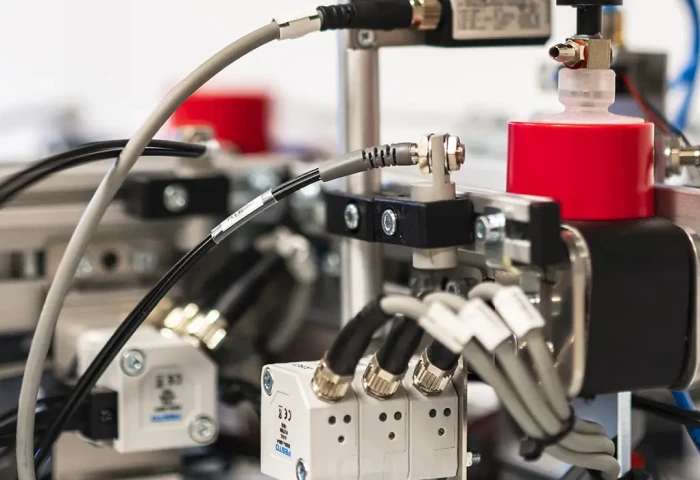
In the second and third years, you work on increasingly complex instruments. You delve into materials, structures, and various production techniques. You also learn more about, for example, electronics and sensors that can be part of an instrument. During internships, you apply your knowledge in the business world.
In the fourth year, everything comes together. You learn to analyze a technical problem or customer request and translate it into your own solution. You design, build, test, and improve a precision instrument and complete your studies with an internship and a graduation project.
Powered by LiS: learning from the vocational school for precision engineering
For this program, Summa collaborates closely with the Leiden Instrument Makers School (LiS).
The LiS has been training instrument makers for over a hundred years and possesses extensive specialized knowledge in the field of fine mechanics and precision engineering. For the new program in Eindhoven, Summa and LiS combine this expertise with the technical programs, facilities, and strong connections to the business community in Brainport.
The program falls under Summa, and you enroll as a student with Summa. The educational program is developed in collaboration with LiS. This ensures you receive a full-fledged education as a Research Instrument Maker in Eindhoven, with the specialized knowledge and quality standards of LiS, and right in the heart of the Brainport high-tech region.
What will you learn?
During the course, you will learn, among other things:
- analyzing technical issues;
- translate a customer request into a technical solution;
- conceive and design precision instruments;
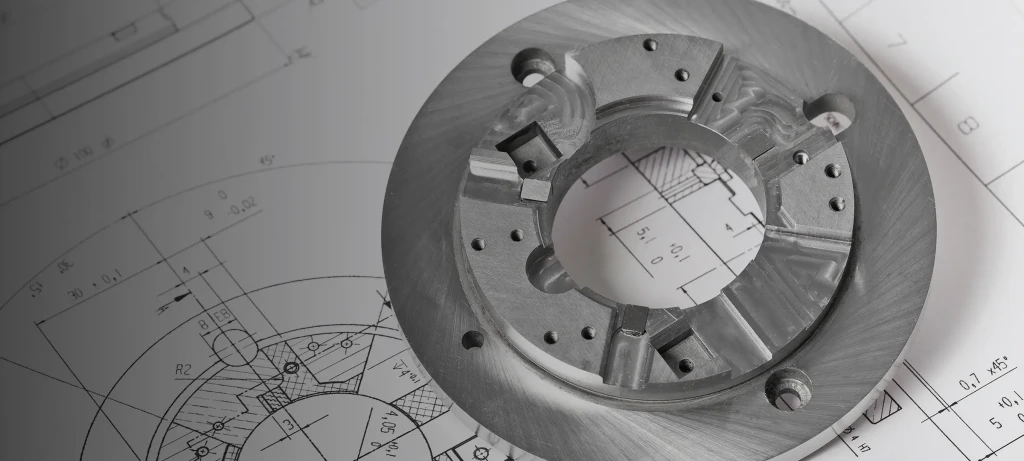
- creating and reading technical drawings;
- turning and milling;
- manual and computer-controlled work;
- know different materials and their properties;
- very accurately measure and produce;
- making precision parts;
- Assemble parts into a working instrument;
- testing, evaluating and improving instruments;
- develop prototypes;
- collaborating with clients, researchers, and technical specialists.
Education and Examination Regulations (OER)
In the Education and Examination Regulations (OER) of a study program, you can read what you will be doing in which period, how much time is spent on this, and an overview of the exams that will be administered. Find the OER for your study program here.
Search by your Crebo number (see the box on the right of this page) to view the OER for the current academic year. This will give you a general idea of what's expected of you when you start the program. The OER for the upcoming academic year will be available in July.
Statutory tuition fees
The statutory tuition fee for the 2027-2028 academic year is 1.554 euros. Check DUO.nl for possible student finance.
Other costs
For an estimate of the other costs for this program, visit mbowebshop.nl . Every year, all school fees for the following academic year are announced there no later than July 1st. To place an actual order, you must log in with your Summa account.
Laptop
For many study programs, students cannot do without a laptop. Check the overview to see if this applies to your program and download the correct specifications.
Elective courses
During your studies, you choose one or more electives to specialize or to broaden your education. Examples include entrepreneurship, leadership, programming, or a language. Throughout your studies, you will receive more information about the electives you can take. You complete each elective with an exam. Read more about electives.
Study in figures
Because Research Instrumentmaker is starting for the first time at Summa in the 2027-2028 academic year, no historical figures are yet available regarding, for example, student satisfaction, study success, and progression.
However, there is a great need in Brainport for technical craftsmanship and specialist knowledge in the field of precision engineering.
What prior education do you need?
For the vocational training (level 3) and middle management training (level 4) you must meet one of the following conditions:
- You have a diploma in pre-vocational secondary education (VMBO) with a pre-vocational secondary education (VMBO) track, a theoretical pre-vocational secondary education (VMBO) track, or a mixed pre-vocational secondary education (VMBO) track.
- You have an (older) diploma from lbo, vbo, mavo or mavo-vbo.
- You have a basic vocational training diploma (level 2) or a diploma from another vocational training course (level 3).
- You have proof that you successfully completed the first three years of pre-university or senior general secondary education (havo) or pre-university education (vwo). Or you have another diploma or certificate recognized by the government.
Additionally
Mathematics, Physics, or Science in your subject package is not mandatory.
Getting to know the program
We believe it is important that you get a good understanding of the profession and the program beforehand. Therefore, after your application, you will receive more information about the introductory activities associated with this program.
Would you like to find out first if a Research Instrument Maker suits you? Then visit an open day or other study choice activity at Summa.
Want to know more?
Do you want to know more now, or be the first to know as soon as registration opens?
Then send an email to denise.metselaar@summacollege.nl . We would be happy to keep you informed about the program and when you can register.
Come to the open day
Curious about what the program will look like and whether Research Instrument Maker suits you?
Come to the open day at the Brainport Industries Campus in Eindhoven on Saturday, October 31, 2026, from 10:00 AM to 3:00 PM.
Summa and LiS are there together, ready to introduce you to the program and answer all your questions.
What are you becoming?
After your training, you will be a research instrument maker. For example, you can work at companies and organizations within:
- research & development;
- high-tech industry;
- medical technology;
- machine and equipment manufacturing;
- precision engineering;
- aerospace.
As a research instrument maker, you often work on products that do not yet exist. You make prototypes and precision instruments that enable researchers, engineers, and companies to develop new technology.
With your level 4 diploma, you can also progress to higher professional education (HBO), for example to Mechanical Engineering or Mechatronics.
What does the training look like?
The Research Instrument Maker program is a full-time (bol) program. This means that you complete the majority of your education at school and also gain practical experience during internships at companies.
Practical work is central. You work extensively in the workshop and learn to make increasingly complex products and instruments step by step.
In the first year, you learn the basics of the trade. You are introduced to various manufacturing processes and learn turning and milling, among other things. You learn to work safely and independently with machines and to accurately measure, make, and assemble parts.
In the second and third years, you work on increasingly complex instruments. You delve into materials, structures, and various production techniques. You also learn more about, for example, electronics and sensors that can be part of an instrument. During internships, you apply your knowledge in the business world.
In the fourth year, everything comes together. You learn to analyze a technical problem or customer request and translate it into your own solution. You design, build, test, and improve a precision instrument and complete your studies with an internship and a graduation project.
Powered by LiS: learning from the vocational school for precision engineering
For this program, Summa collaborates closely with the Leiden Instrument Makers School (LiS).
The LiS has been training instrument makers for over a hundred years and possesses extensive specialized knowledge in the field of fine mechanics and precision engineering. For the new program in Eindhoven, Summa and LiS combine this expertise with the technical programs, facilities, and strong connections to the business community in Brainport.
The program falls under Summa, and you enroll as a student with Summa. The educational program is developed in collaboration with LiS. This ensures you receive a full-fledged education as a Research Instrument Maker in Eindhoven, with the specialized knowledge and quality standards of LiS, and right in the heart of the Brainport high-tech region.
What will you learn?
During the course, you will learn, among other things:
- analyzing technical issues;
- translate a customer request into a technical solution;
- conceive and design precision instruments;
- creating and reading technical drawings;
- turning and milling;
- manual and computer-controlled work;
- know different materials and their properties;
- very accurately measure and produce;
- making precision parts;
- Assemble parts into a working instrument;
- testing, evaluating and improving instruments;
- develop prototypes;
- collaborating with clients, researchers, and technical specialists.
Education and Examination Regulations (OER)
In the Education and Examination Regulations (OER) of a study program, you can read what you will be doing in which period, how much time is spent on this, and an overview of the exams that will be administered. Find the OER for your study program here.
Search by your Crebo number (see the box on the right of this page) to view the OER for the current academic year. This will give you a general idea of what's expected of you when you start the program. The OER for the upcoming academic year will be available in July.
Statutory tuition fees
The statutory tuition fee for the 2027-2028 academic year is 1.554 euros. Check DUO.nl for possible student finance.
Other costs
For an estimate of the other costs for this program, visit mbowebshop.nl . Every year, all school fees for the following academic year are announced there no later than July 1st. To place an actual order, you must log in with your Summa account.
Laptop
For many study programs, students cannot do without a laptop. Check the overview to see if this applies to your program and download the correct specifications.
Elective courses
During your studies, you choose one or more electives to specialize or to broaden your education. Examples include entrepreneurship, leadership, programming, or a language. Throughout your studies, you will receive more information about the electives you can take. You complete each elective with an exam. Read more about electives.
Study in figures
Because Research Instrumentmaker is starting for the first time at Summa in the 2027-2028 academic year, no historical figures are yet available regarding, for example, student satisfaction, study success, and progression.
However, there is a great need in Brainport for technical craftsmanship and specialist knowledge in the field of precision engineering.
What prior education do you need?
For the vocational training (level 3) and middle management training (level 4) you must meet one of the following conditions:
- You have a diploma in pre-vocational secondary education (VMBO) with a pre-vocational secondary education (VMBO) track, a theoretical pre-vocational secondary education (VMBO) track, or a mixed pre-vocational secondary education (VMBO) track.
- You have an (older) diploma from lbo, vbo, mavo or mavo-vbo.
- You have a basic vocational training diploma (level 2) or a diploma from another vocational training course (level 3).
- You have proof that you successfully completed the first three years of pre-university or senior general secondary education (havo) or pre-university education (vwo). Or you have another diploma or certificate recognized by the government.
Additionally
Mathematics, Physics, or Science in your subject package is not mandatory.
Getting to know the program
We believe it is important that you get a good understanding of the profession and the program beforehand. Therefore, after your application, you will receive more information about the introductory activities associated with this program.
Would you like to find out first if a Research Instrument Maker suits you? Then visit an open day or other study choice activity at Summa.
Want to know more?
Do you want to know more now, or be the first to know as soon as registration opens?
Then send an email to denise.metselaar@summacollege.nl . We would be happy to keep you informed about the program and when you can register.
Come to the open day
Curious about what the program will look like and whether Research Instrument Maker suits you?
Come to the open day at the Brainport Industries Campus in Eindhoven on Saturday, October 31, 2026, from 10:00 AM to 3:00 PM.
Summa and LiS are there together, ready to introduce you to the program and answer all your questions.
News
Need help with your study choice?
We are ready for you!
Are you unsure about which study program to choose, or do you have no idea yet which direction you want to take? Then take the study choice test and talk to our study choice coaches. We are happy to help you on your way.