Thanks to the MBO track, students can enter the labor market sooner.
As a result , ICT students following the new MBO-HBO track offered by Fontys, Summa , and Yonder will obtain their HBO diploma a year earlier. The initiative aims to improve the transition from MBO to HBO, prevent dropouts, and guide students to the labor market more quickly. This is sorely needed, as the demand for ICT professionals is high, including in the semiconductor sector. Lieke Buiks, educational expert and coordinator of the MBO track at Fontys ICT, is therefore pleased that the program is catching on. “Three-quarters of the eligible students have signed up.”
The MHBO track is intended for students in the final year of their MBO ICT System Engineer or Software Developer program at Summa in Eindhoven or Yonder in Tilburg. “They work on assignments at a higher professional education level for the entire year,” explains Lieke. “They do this partly online and at their own program. But they also come to Fontys ICT two days a week for half a year, where they work on a project for a real client. This allows them to gain intensive experience with higher professional education.” If the students successfully complete their assignments, they earn an exemption for the first year of study at Fontys. “This therefore results in significant time savings: for a bachelor's degree, they only need to study for three instead of four years, and for an Associate degree, only one year.”
Fewer study dropouts
This time saving allows students to enter the labor market sooner, where there is a high demand for HBO-educated ICT professionals. But there are more reasons for the MHBO track. “We noticed that HBO students who previously completed MBO are not always motivated in the first semester, sometimes resulting in study dropout. That semester covers basic knowledge that they have often already acquired in MBO. We specifically want them to be able to put that knowledge to full use immediately. The exemption year makes this possible.” The content of the MHBO track has also taken this into account. Together with Summa and Yonder, Lieke looked at the curricula of the three ICT educational institutions. “Where is there still a gap between MBO and HBO? And what is therefore needed to bring students up to speed during an MHBO track? It turned out not to be so much subject-specific knowledge, but rather HBO study skills, such as working in a research-oriented manner, collaborating on complex assignments, and learning to analyze and advise. These therefore form important components of our MHBO track.”
The MBO diploma comes first
The three ICT education institutions had already been collaborating for some time, but just a bit more intensively for the MHBO track. This also brought with it a few challenges. “Mainly regarding the practical and legal aspects: where does the tuition fee go? What about insurance, and how do you give students from other institutions access to our education systems? That is quite complicated,” says Lieke. “In addition, we paid close attention to not overtaxing the MBO student. Obtaining their MBO diploma is the priority. If it turns out that the MHBO track is too demanding, they can stop at any time. They are not tied to anything.” Perhaps that is one of the reasons why the track is so popular. “Besides the many applications, I also heard at open days that it makes ICT studies more attractive. Having an HBO diploma in hand in a shorter time appeals to young people who are already interested in ICT.”
First group started
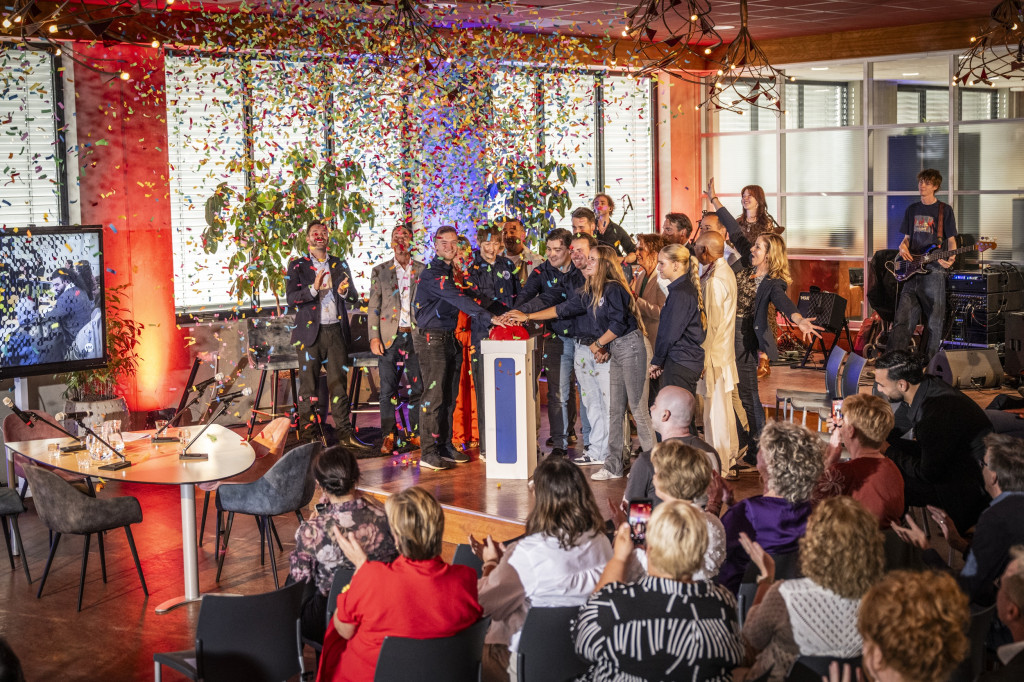
The first group of students started the MHBO track this school year. Therefore, Lieke wants to see how it works in practice and evaluate what does and doesn't work before making future plans. Nevertheless, she does have a secret wish. “I would love to collaborate with even more MBO educational institutions. I am currently having initial discussions with them. And perhaps the MHBO track will also be an inspiration for other study programs. That would be wonderful.”
Other news