All-round Production Technology Employee (BBL)
Expertises
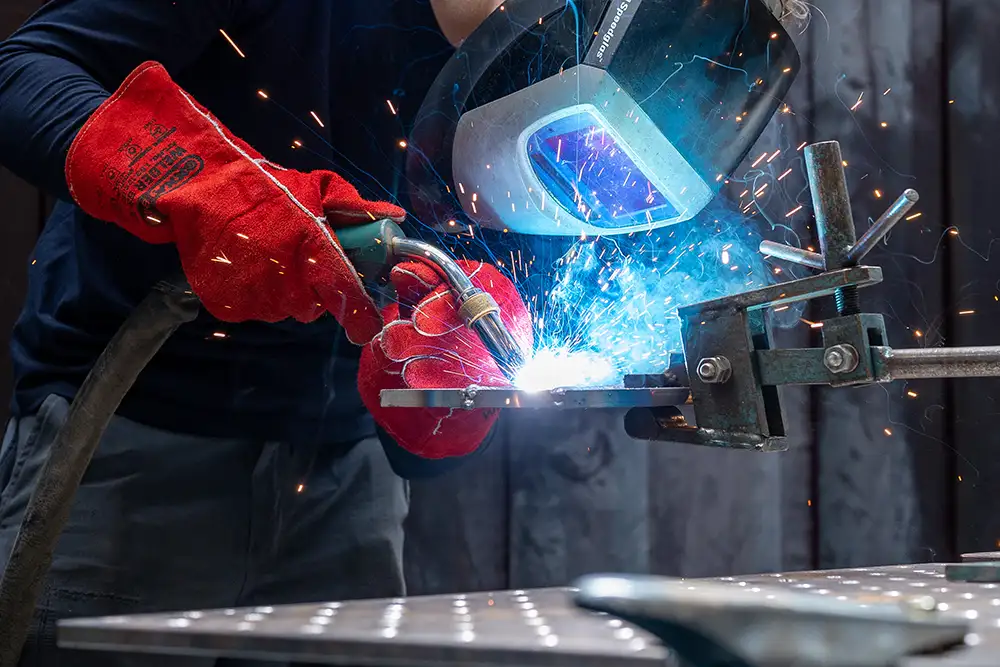
All-round welder
Become an independent professional and perform certified welding work
The All-round Production Technology Welder training program trains you to become an independent skilled craftsman. The work pace is higher and you work more independently.
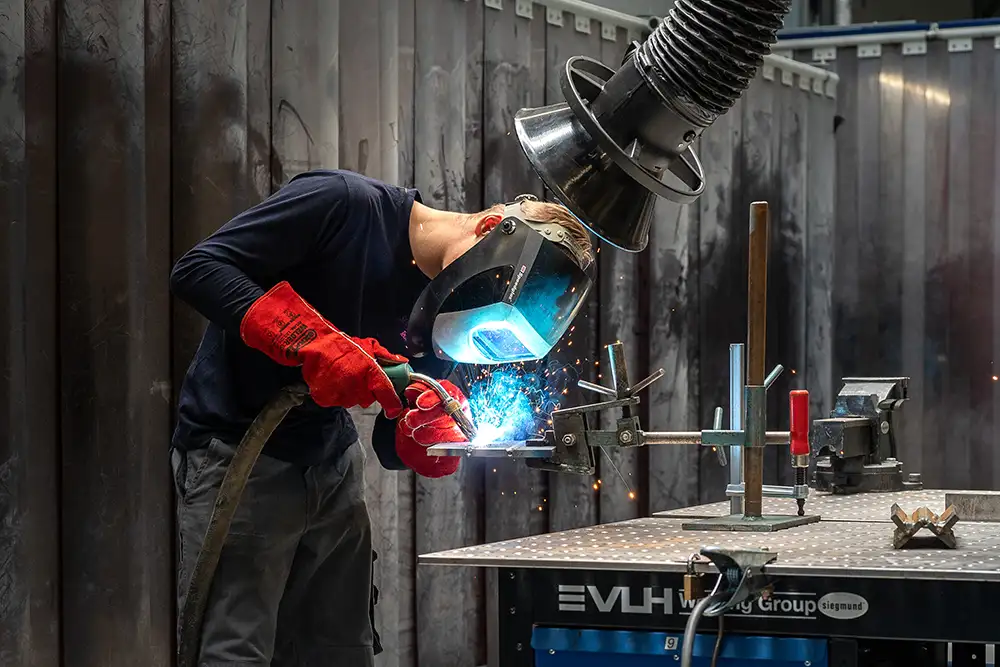
As a basic welder, you'll create products that meet specific quality standards. You'll follow the welding procedure specifications precisely. You'll have an executive role and initially support the all-around welder. As you gain experience and learn more at school and on the job, you'll work your way up to becoming an all-around welder.
At school, you get to know construction machines and new machining techniques. You learn how to describe the making of a workpiece and why you apply certain techniques and methods. You work accurately and also pay close attention to errors and deviations made by others. Craftsmanship!
All-round sheet metal worker
Work independently with stainless steel, steel and aluminum sheet metal
With technical and spatial insight, you'll create sheet metal products for sheet metal structures and assemble these structures. You'll often work with sheet metal up to three millimeters thick, made of stainless steel, steel, and aluminum.
Once you hold a product in your hands, you quickly understand how it fits together. This technical and spatial insight will come in handy as an all-around sheet metal worker. You'll create sheet metal products for sheet metal structures and assemble these structures. You'll often work with sheet metal up to three millimeters thick, made of stainless steel, steel, and aluminum. The All-around Sheet Metal Worker training program will train you to become an independent professional.
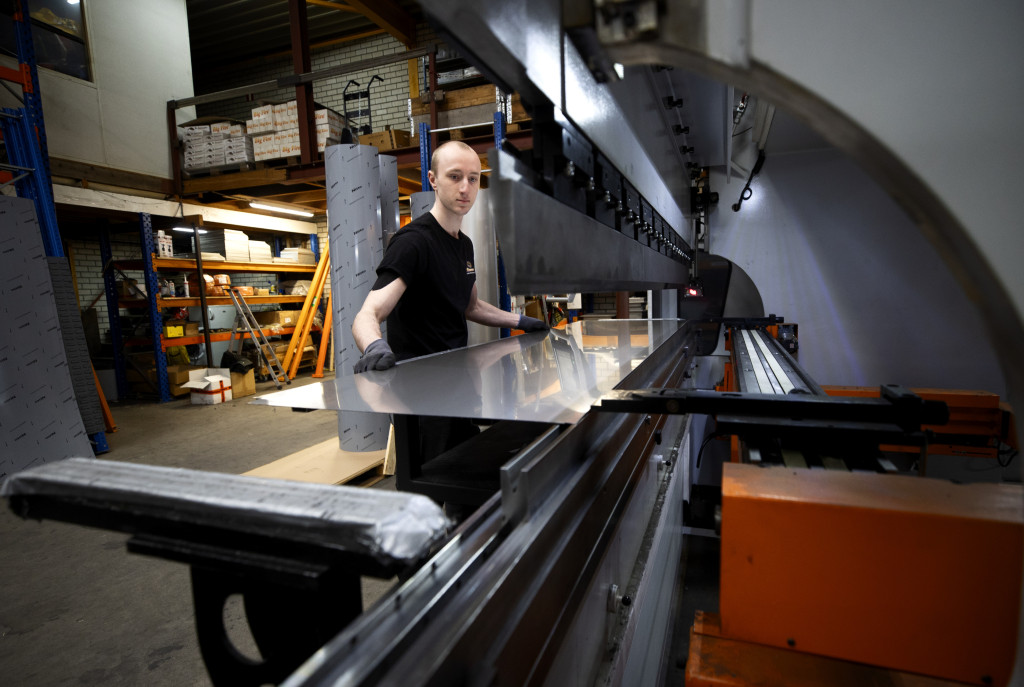
As an all-around sheet metal production technician, you can do everything yourself. You'll work with laser, plasma, or waterjet cutting machines, press brakes, profile bending machines, and various welding methods. You'll not only be able to operate CNC-controlled machines, but you'll also learn to write and test the necessary CNC programs.
As a skilled craftsperson, you also work by hand, such as punching out sheet metal. You're meticulous and therefore also check your colleagues' work. Together, you're responsible for the quality of the work. A responsible and independent role in the metal industry!
All-round construction worker
Working on steel and machine constructions: rolling up your sleeves
As an all-round production technology construction employee, you will be involved in assembling components for steel constructions and machine constructions for the food industry, for example.
As a beginner construction worker, you'll first perform routine tasks using various types of machinery, such as laser, plasma, or waterjet cutting machines, press brakes, and profile bending machines. You'll also learn various welding methods. By the end of the training, you'll be working independently and becoming a true professional.
All-round machinist
Thanks to your programming talent, the CNC machine produces a perfect product
As an all-round precision machinist, you produce products using complex computer-controlled machining machines, also known as CNC machines.
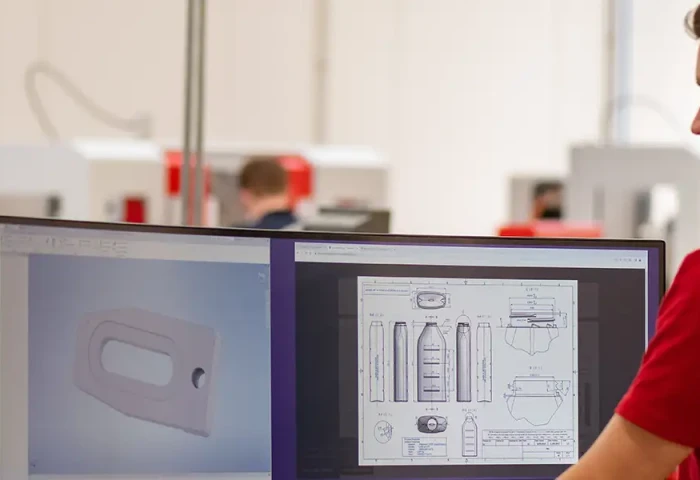
These machines allow you to apply various machining techniques, such as milling and turning. You work on materials like plastic, steel, cast iron, and aluminum. You work based on a working drawing and program the machine using a CAD/CAM program, for example. Then you clamp the workpiece and let the machine do the work. After machining, you measure and inspect whether the product exactly meets the requirements in the drawing.
As an all-round machinist, you also contribute ideas to new productions. At school, you learn to work safely with complex CNC machines. You also receive instruction in CAD/CAM programming. For this, it is important that you have technical and spatial insight and can think abstractly.
More information.
What are you becoming?
As a construction worker, you can work for construction companies, suppliers, machinery and equipment manufacturing companies, or the transportation industry. You can also progress to level 4 training.
As an all-round welder, you can work in the metal products industry, the transport equipment industry, the petrochemical industry, at construction companies, or at companies in the machine and equipment manufacturing sector, for example. You can also progress to the level 4 training program.
As an all-around sheet metal worker, you could work in mechanical and equipment construction, the transportation industry, telecommunications, or the computer industry. You could also progress to the level 4 Construction and Sheet Metal Technology or Technical Management program.
As an all-around precision machinist, you could work for companies in the steel, aluminum, or plastics industries, among others. You can also further your professional development with the MBO-4 program to become a Machining Technologist.
What does your education look like?
You'll attend theory classes at school one day a week. You'll also work in the field at your training company.
Complete the program in 2 year
You can also complete the program in two years. To be eligible for this, you must meet certain progress requirements. Among other things, your level of Dutch and arithmetic, your professional attitude, and attendance are assessed. After the first period, it is determined whether you meet these progress requirements and whether you can complete the program at an accelerated pace. This gives you the opportunity to finish the program within two years.
Additional guidance with the bbl-plus program
Could you use some extra guidance with practical learning? Then the BBL-plus track is for you:
- Individual learning path with a lot of personal attention
- Practical learning in the high-tech practice area of the Brainport Industries Campus
Education and Examination Regulations (OER)
In the Education and Examination Regulations (OER) of a study program, you can read what you will be doing in which period, how much time is spent on this, and an overview of the exams that will be administered. Find the OER for your study program here.
Search by your Crebo number (see the box on the right of this page) to view the OER for the current academic year. This will give you a general idea of what's expected of you when you start the program. The OER for the upcoming academic year will be available in July.
Statutory tuition fees
The statutory tuition fee for the 2027-2028 academic year amounts to 784 euros.
Other costs
NIL welding diplomas
We recommend obtaining a NIL2 welding certificate during this training. The cost of this welding exam is approximately €150. Training for this takes place on-site or can be outsourced. For more information about the options and costs, please contact us at 040 269 4450.
Learning resources
For an estimate of the other costs for this program, visit mbowebshop.nl . Every year, the costs of learning materials for the following academic year are announced there no later than July 1st.
Laptop
For many study programs, you cannot do without a computer as a student. Check the overview to see if this applies to your program and download the correct specifications.
Elective courses
During your studies, you choose one or more electives to specialize or to broaden your education. Examples include entrepreneurship, leadership, programming, or a language. Throughout your studies, you will receive more information about the electives you can take. You complete each elective with an exam. Read more about electives.
Study in figures
Study in Figures provides clear information about this program and job market opportunities. Would you like to know more about these figures? Then check out this explanation.
What prior education do you need?
For the vocational training (level 3) and middle management training (level 4) you must meet one of the following conditions:
- You have a diploma in pre-vocational secondary education (VMBO) with a pre-vocational secondary education (VMBO) track, a theoretical pre-vocational secondary education (VMBO) track, or a mixed pre-vocational secondary education (VMBO) track.
- You have an (older) diploma from lbo, vbo, mavo or mavo-vbo.
- You have a basic vocational training diploma (level 2) or a diploma from another vocational training course (level 3).
- You have proof that you successfully completed the first three years of pre-university or senior general secondary education (havo) or pre-university education (vwo). Or you have another diploma or certificate recognized by the government.
Work at a recognized training company
During a personal interview or introductory meeting, we'll determine if this program is a good fit for you. To participate in this program, you must work at an accredited training company. If you don't work for such a company, we'll help you find a suitable work placement. You'll be responsible for finding one yourself.
For an overview of recognized training companies and more information about the labor market, internships, and professions, visit www.s-bb.nl.
Can I contact a teacher?
Teachers know what's going on at school. Feel free to ask your questions using the contact information below:
WhatsApp
Contact Paul van Mierlo
E-mail
Contact Paul van Mierlo
It is also possible to attend a shadowing day, guided tour, or open day. You can find all activities in our calendar.
Industry news
Delicious with working
Need help with your study choice?
We are ready for you!
Are you unsure about which study program to choose, or do you have no idea yet which direction you want to take? Then take the study choice test and talk to our study choice coaches. We are happy to help you on your way.